Pages

Showing posts with label books. Show all posts

Wednesday, August 10, 2016

Are You There, Internet? It's Me, Etienne.


This morning I skipped my recumbent ride in order to paint a door.


Its white paint was peeling in places; now it's slate grey.

I finished my third read-through of Dave Robinson’s and Judy Groves’s delightful Introducing Philosophy: A Graphic Guide. I have yet to transcribe all of my notes, but my favourite quote is an apt description of the current state of discourse: “You pay your money and you pick your language game.”

I started Simon Crichtley’s Continental Philosophy: A Very Short Introduction. The title is misleading: as far as I can make it out, it’s actually a long essay arguing for more dialogue between the major philosophical traditions. Thirty pages in, I am not convinced this is entirely necessary. Philosophy is a broad church; the human condition presents enough problems to occupy any number of professional thinkers. A shared idiom or method would not necessarily make the task of interpreting the world any easier; the dialogue de sourds provides opportunities for useful misappropriation (or strong misreading, as Bloom puts it). I am moreover skeptical of the significance of the Continental/analytic divide in the age of Cultural Studies. Like it or not, we will have theories, and hermeneutics, of everything.

Favourite quote so far: “Food first, then ethics”—one of Brecht’s witticisms.


My colouring books have arrived.

The poster-sized volume is a masterpiece of cultural appropriation (putting deities in the same category as creatures is an egregious misapprehension of polytheism). The smaller book (on tattoo art) also features a great deal of sacred imagery, including a spiffy Mjölnir. Creatively-speaking, colouring offers limited benefits, but I want to diversify my downtime activities to include tasks that don't involve a screen. Until recently, my leisure time was divided between aimless internetting and Baldur’s Gate.


I picked blueberries. And cucumbers.

I did (1x30)+(2x25)+(1x20) push ups.

Sunday, October 26, 2014

The Hero With a Thousand Faces


"The gods as icons are not ends in themselves. Their entertaining myths transport the mind and spirit, not up to, but past them, into the yonder void; from which perspective the more heavily freighted theological dogmas then appear to have been only pedagogical lures: their function, to cart the unadroit intellect away from its concrete clutter of facts and events to a comparatively rarefied zone where, as a final boon, all existence -- whether heavenly, earthly or infernal -- may at last been seen transmuted  into the semblance of a lightly passing, recurrent, mere childhood dream of bliss and flight." 

Considering how much of his exegesis celebrates the heteronormative male's dominion over female elements, it is perplexing to witness Campbell prescribe mythic thinking as a solution to our supposed crisis of meaning. Neither the imitation of the hero nor the metaphysical interpretation of his journey as a testament to the eternity of the Self constitute a clear guide for everyday living. Were Campbell correct in assuming the decline of the myths' influence, we would still be hard-pressed to find ethical grounds for their restoration to an honorable place in pluralistic societies.

According to Campbell's monomyth, the hero (typically: a man) is part of a diad with his God, (usually: a paternal figure) who confronts the former with the shattering revelation of the hero's own truth. The hero's journey is itself a metaphor for that truth, which is ultimately the realization of some great universal unity. The hero's trophies (i.e. his rescued princess!) are purported to symbolize the elevation of consciousness to that unitarian vision.

Campbell's contention is that all of myth has but one message, audible on that high frequency of mystery, the exalted level at which ordinary signification breaks down. The message is a metaphysic of the constancy of undifferentiated Being, in which we are supposed to discover a justification for all of our suffering and travails (amor fati).

A sober-minded intellectual might instead entertain the possibility that mystery is a reference without a clear referent; the semantic dance of mythic narratives may not conform to a unified theory positing anything more than categories to use for legitimate comparison. One might even suggest that mystery is not media but the point where meaning ends -- for good or ill, the frontier of arbitrariness.

And so: Campbell's genius lies not so much in finding coherence but in articulating schema on the basis of which to comment on similarities and differences. In that respect, his monomyth is immensely valuable. Despite his excessive eagerness to promote his own brand of stoicism as the origin and essence of all myths, his denunciation of literalism and theological parochialism is certainly much to his credit:

"Mistaking a vehicle for its tenor may lead to the spilling not only of valueless ink, but of valuable blood."

Saturday, June 07, 2014

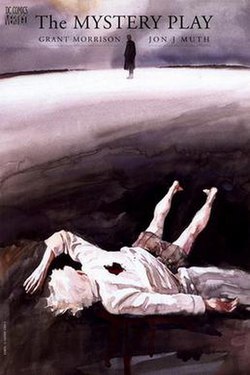
The Mystery Play


The Mystery Play is difficult to summarize. Part religious allegory, part mystery novel, it is a well-executed experiment in rural noir, lending itself to many interpretations (and in all honesty: a bit hard to read).

Parallels could be drawn with Arkham Asylum in that madness is a fairly central theme. Muth's hyperrealistic art (which is reminiscent of Dave McKean's) has a kind of oneiric quality, and adequately conveys the protagonist's confusion.

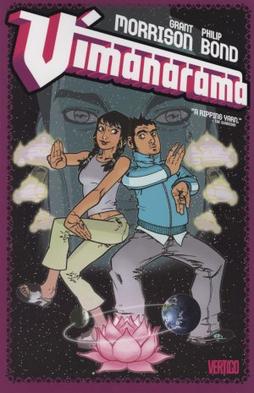
Vimanarama!


Called back to Earth after 6000 years away in outer space, the gods find the human race much diminished, largely unfit to defend itself against the antediluvian demon-robots who are destroying London. Caught in the middle of it all, Ali picks the worst possible moment to have an existential crisis, hoping his arranged marriage will prove the benevolence of God.

In other words: Best. Thing. Ever.

The human cast is immediately endearing. Far from diminishing the supernatural characters' mystique, the deliberate distortion of religious tropes demonstrates the shortcomings of ordinary rationality when it comes to apprehending the numinous.

Grant Morrison is in top shape. Philip Bond's art seamlessly mixes the caricatural and the iconic, to great effect. Vimanarama is both esoteric and fun -- a rare combination -- and accomplishes all it sets out to do in only three issues.

Monday, April 14, 2014

Diary: A Novel


This one is delectably erudite and rife with half-truths. It seems that taking liberties with History is rather the point and the art of it. We must reclaim our freedom from History, from the "collective unconscious" and other forms of maieutics, as these are not emancipatory forces. Theirs is an ancient and insidious kind of domination, like the karmic cycle which we must escape.

Thursday, April 10, 2014

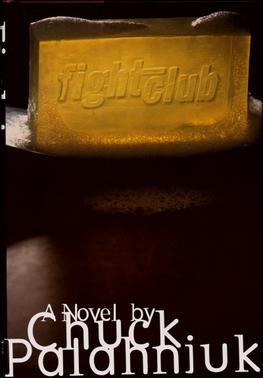
Fight Club


It must be added to the "list of novels I did not like," not because it is poorly written or uninteresting (quite the contrary) but because I feel strongly that ...


1. ... there are many acceptable ways to be a person, and/or a man, and/or fatherless;
2. ... there are at least as many legitimate ways to be free.

One can choose to be completely determined by history or not -- a cynical corporate whore or not -- a raving, Chaos-worshipping urban savage or not. One is free to do what one can with oneself, to love others and oneself. Maximum smashism is not the only -- nor necessarily the most exalted -- mode of being.

Angry folk will inevitably read some kind of hypermasculinist gospel into Fight Club even though the book does not make any unequivocal claim to that effect, and so: I can't completely like Fight Club, because there are still angry folk who read books, and I wouldn't want to endorse their interpretation.

Saturday, March 23, 2013

Making Comics by Scott McCloud


Advice is cheap. And plentiful; the electronic ether is alive with the voice of a million gurus and charlatans, some well-meaning, some egotistic, most a combination of the two. I have myself occasionally operated under the delusion of having heard the plea of the ignorant; of being capable – nay, required – to impart necessary knowledge. This, as the Teacher put it, is vanity.

The superabundance of short guides and SparkNotes indubitably has many advantages, though it also tends to make it more difficult to focus on those works wherein one might find substance worthy of sustained attention. Scott McCloud’s guides to comics (Understanding Comics and Making Comics) fit squarely in the category of "must read" in that they creatively synthesize many compelling theories about art and storytelling. Though McCloud focuses on sequential art, all creators should be able to appreciate his psychology of artistic experience, which focuses heavily on the audience’s appropriation of the narrative.

Best of all, McCloud’s guides are extremely pleasant to read. Jargon is kept to a minimum and even the most complex of concepts are elegantly illustrated. The books criticise many forms of dogmatism prevalent in the arts, and such critiques are made more convincing by their author's admission of his own biases. McCloud provides a detailed bibliography of his sources, and is otherwise very demonstrative of his gratitude towards his many inspirations.

Making Comics suggests creators remain mindful of the following five story-telling goals:


1. Look for stories that are rooted in your own experience and that speak to the experiences of your readers

2. Find new and interesting kinds of conflicts between characters

3. Surprise your readers

4. Provoke emotions by tapping into common heritage and experience

5. Make your audience care

Though McCloud’s practical advice may seem initially obvious, it is the kind of sound logic which tends to get drowned out by impulses and aspirations – in other words: it bears repeating, if only on account of how seldom such wisdom is taken to heart.


Thursday, March 21, 2013

Neil Gaiman's Books of Magic


I forget when I first came across Neil Gaiman’s Books of Magic. It must have been in the early 2000s, before I turned the study of sequential art into something of a morbid obsession. I was not yet versed in the lore, though I had probably spent some time with the Sandman.

Timothy Hunter’s inaugural adventure is a graphic novel adaptation of every escapist’s childhood dream: mysterious agents of destiny reveal themselves to make promises of unimaginable power and take the protagonist to see the surreal underside of the world. Folklore notions – even some fairly academic ones – are brought to contribution, and so the monsters and the wonders which we are taken to visit are rendered more credible by their richness and familiarity.

Upon a recent second reading, I found it perplexing that I so loved the book at the time of my first exposure, for I could not have been very familiar with the characters (apart from John Constantine and the Endless). This tends to show that the novel’s more hermetic aspects (such as its references to the wider DC universe) must have been expertly counterbalanced by Gaiman’s story-telling. The trick of hiring four different artists to convey changing moods – and reflect the four stages of the protagonist’s initiatory journey – is exceptionally well executed; in less capable hands, the project would have likely turned into an inchoate mess.

While not the most accessible of Gaiman’s works, The Books of Magic is a must-read for anyone even remotely interested in the supernatural. The stories which John Ney Rieber developed subsequently with the same characters, though adequately told and illustrated, do not approach Gaiman’s miniseries in terms of depth, and will likely only interest aficionados of the genre.

Tuesday, March 12, 2013

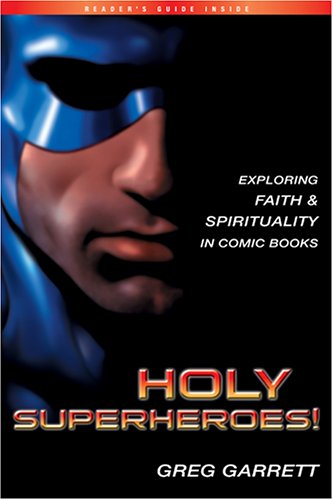
Holy Superheroes! by Greg Garrett


With Holy Superheroes!, Prof. Greg Garrett delivers an unpretentious exploration of Christian morality through favourite comic-book exemplars. 


The work is not particularly critical of the genre, nor is it exceptionally wide-reaching in its philosophical scope. Other books, such as the Blackwell Philosophy and Pop Culture Series, have deployed much more significant efforts in exposing lay audiences to ethical and metaphysical concepts through popular media. Prof. Garrett’s exposé deviates significantly from the tried-and-tested approach by focusing on moral lessons instead of philosophical questions. While the wealth of the author’s frame of reference leaves no doubt as to his erudition, sophisticates will likely sneer at the simplicity of Prof. Garrett’s interpretations and the way in which they betray his own biases. Holy Superheroes!, evidently, is intended more for the mythical Everyman than for the collegiate or post-collegiate reader.

It should not be thought that the kind of book which Prof. Garrett writes does not have its place in the forum of serious discussions on speculative fiction. Candour, and even a certain naïveté, can be refreshing, grounding us when we would get lost in technicalities. We must never forget that, at their core, stories are words exchanged between human beings; the complex interplay of overarching ideologies, while fascinating to academics, is of secondary interest to the majority of readers.

Prof. Garrett’s prose, while adequate, becomes something of an impediment to his message when he veers inexplicably into the realm of the colloquial, like an overenthusiastic preacher or a self-conscious teacher trying too hard to be cool. The book’s last few pages present some interesting recommendations grouped by theme; much to the author’s credit, some of these titles may surprise the non-religionist on account of their overt irreverence. 

Friday, February 22, 2013

An Unlikely Prophet by Alvin Schwartz


“Genre-defying” is not a term one should throw around willy-nilly. “Genre,” after all, functions as a category for comparison. Placing a work outside of genre relegates it to a gray area beyond the reach of much conventional literary criteria.

But every now and again there comes a book which is genre-defying in the truest sense. Comics great Alvin Schwartz was likely aware that his last work, An Unlikely Prophet, would prove difficult for his audience to categorize – and so the original 1997 edition was subtitled Revelations on the Path Without Form, setting it well outside the realm of conventional fiction and into that of esoterica. The 2006 reprint used a different subtitle, likely a new publisher’s sales-pitch: A Metaphysical Memoir by the Legendary Writer of Superman and Batman.

Mercantile logic notwithstanding, that latter subtitle is perhaps more revealing as far as genre is concerned; as a first-person narrative, An Unlikely Prophet is very much a memoir, though one that is largely fictionalized – allegorized, even – to tackle metaphysical notions. The novel is reminiscent of Richard Bach’s Illusions, Herman Hesse’s Siddhartha, or the best documents of the New Thought movement in that it blurs the ordinary distinction between thinking and reality. Mr.Thongden, the character whom Schwartz uses as a mouthpiece for his esoteric views, is masterfully introduced and developed, being revealed early on to be a tulpa (a kind of thought-golem). Schwartz’ prose is mature and researched, seamlessly integrating references to the Fine Arts, Hawaiian and Tibetan ethnography, neurology, and new physics.

An Unlikely Prophet’s pacing might have benefited from the use of more diverse situations in which to explore the ideas being presented; be that as it may, this is a small complaint considering the novel’s short length. As the book lends itself to many levels of interpretation, readers uninterested in the author’s metaphysical persuasion may still find it an interesting exercise in the style of magical realism. 

Thursday, February 21, 2013

Perry Moore's Hero


I should stop basing my expectations on endorsements. I recently bought Jane Yolen’s The Last Dragon because it came with Ursula K. Leguin’s stamp of approval; I was hoping it would turn out to be a graphic novel successor to the Earthsea series. The Last Dragon was certainly an elegant, non-standard fantasy, featuring empowered women and a different kind of problem-solving than is typically found in the mythopoetic genre. Unfortunately, I cannot honestly say that it was erudite, nor very psychoanalytical – in other words: not nearly as deep as Leguin’s work.

I have had similar experiences with Perry Moore’s debut novel Hero. This superhero bildungsroman constructed around the character of a gay metahuman was endorsed by Stan Lee and Maurice Sendak (amongst others). I suppose I was expecting something of Lee’s punchy narrative genius, or else a dose of Sendak’s introspective surrealism; I got neither.

My reading was haunted by vague intimations of what an excellent novel Hero could have been if it had fallen into the hands of a more capable editor. The writer conjures endearing characters, but these are mostly shown at their worst, as though they need to break down before they can open up. Moore’s style gets very awkward at times; it alternates between character development (nearly always in the form of personal crises or confessions) and a rather convoluted plot. Being extremely personal, the themes of identity and orientation would be best presented in a more allusive style. Instead of placing the inner struggles at the forefront of the narrative by making them terribly explicit, I feel as though hinting at the characters’ emotional tensions/ambivalence could have helped me sympathetize with them. It is preferable to risk giving readers too much interpretational freedom rather than force them into identifying with characters whose struggles and foibles are very much exclusively their own.

Hero’s flow is hindered by Proustian flashbacks and imprecise descriptions which make action sequences very difficult to understand; this is particularly regrettable considering the lengths to which the author goes in order to establish the novel in the superhero genre.

Despite Moore’s shortcomings as a storyteller – which we might have expected him to transcend had his life not come to a tragic end in 2011 – Hero constitutes a bold and laudable attempt at lending a legitimately gay voice to the superhero genre.